A price is only as good as the competition behind it. When a dozen sellers list the same card, the middle of that book is a market. When one seller lists it, the price is that seller's opinion and it moves the moment they sell. So we measured which one this hobby actually is, across 52,282 card lines where we can see both the market price and the cheapest copy currently for sale. On 43,654 of them, 83.5%, they are the same number to the cent. That is not a rounding artifact. It is the shape of a hobby where most cards, at almost any price, have exactly one seller at the front of the queue.
Being expensive does not buy you a second opinion
The intuition runs the other way. An expensive card should attract more sellers, more listings and therefore more spread between the cheapest one and the middle of the market. On our tape it does not: above a dollar the share sits between 89.3% and 91.8% at every level, with no trend to speak of, and the only band that breaks the pattern is the cheapest one.
Share of lines where market price and cheapest listing are identical
| Price band | Lines | Single price |
|---|---|---|
| $100 and above | 1,787 | 91.8% |
| $25 to $100 | 4,308 | 90.1% |
| $5 to $25 | 9,826 | 90.6% |
| $1 to $5 | 13,499 | 89.3% |
| Under $1 | 22,862 | 75.1% |
The cheapest tier is the one with the most disagreement, which makes sense once you stop thinking of it as a market: bulk commons attract scattered listings at scattered prices from sellers who are not really competing. Everywhere above a dollar the picture is the same regardless of price. One serious listing sets the number, and our market price is that listing.
When the cheapest copy costs more than the market price
On 5,020 lines the cheapest listing sits ABOVE the market price, which is arithmetically odd and worth being upfront about. It means the two figures are read at different moments or from different pools: a market price that has not caught up with a shelf that has emptied out, or a floor drawn from a different condition or printing than the price. Either way, on nearly one line in ten the pair cannot both be describing the same thing right now.
Where a gap actually exists, it can be enormous
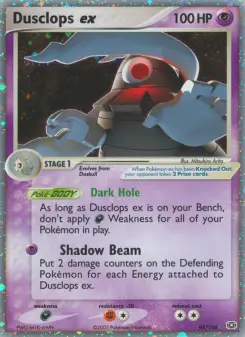
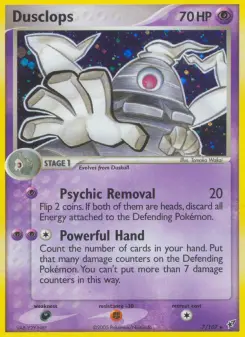
That leaves 3,608 lines, about 7% of the priced lines, where the cheapest listing genuinely sits below the market price. On those, the distance is often not subtle. Dusclops ex from Emerald carries a $110.00 market price against a $0.49 cheapest copy. Dusclops from Deoxys reads $41.52 against $3.00. Those are the two ends of the same problem: a market price built from history that a current shelf disagrees with.
Read from our card price tape on day 20717 (September 21, 2026). A line qualifies when both a market price and a cheapest-listing price are present and above zero, which on day 20717 is all 52,282 lines the tape covered that day, out of a 63,838-card catalog. Identical means equal to the cent, not approximately equal. Price bands are cut on the market price. The tape is daily and roughly three weeks deep, so this is a census of one day rather than a trend; the share has not been tracked over time and no claim is made that it is rising or falling. Nothing here is investment advice.