
Print runs are the hobby's best-kept non-secret: The Pokémon Company has never disclosed one, and every number you have seen quoted is folklore. But grading registries are a fossil record. Cards from big printings accumulate big populations; cards from small ones cannot, no matter how loved. Across 203 sets where we track at least three cards' populations, the strata are stark enough to read like geology.
The five deepest and five shallowest registries we track (average pop across a set's tracked cards above pop 100)
| Set | Avg pop | Reading |
|---|---|---|
| MEP Black Star Promos | 38,076 | handout-scale print, graded by everyone |
| SV-P Promotional Cards (JP) | 30,601 | JP promo flood |
| Terastal Fest ex (JP) | 20,436 | modern JP mega-print |
| M2 Inferno X (JP) | 19,039 | current chase engine |
| Celebrations | 18,661 | the anniversary print went WIDE |
| Mysterious Treasures | 332 | DP-era: nobody graded, few survive NM |
| Flight of Legends | 292 | quiet vintage stratum |
| Majestic Dawn | 275 | ditto |
| Chaos Rising | 245 | too new to grade deep, watch this one |
| Rising Rivals | 234 | the shallowest layer we track |
How to read the strata honestly
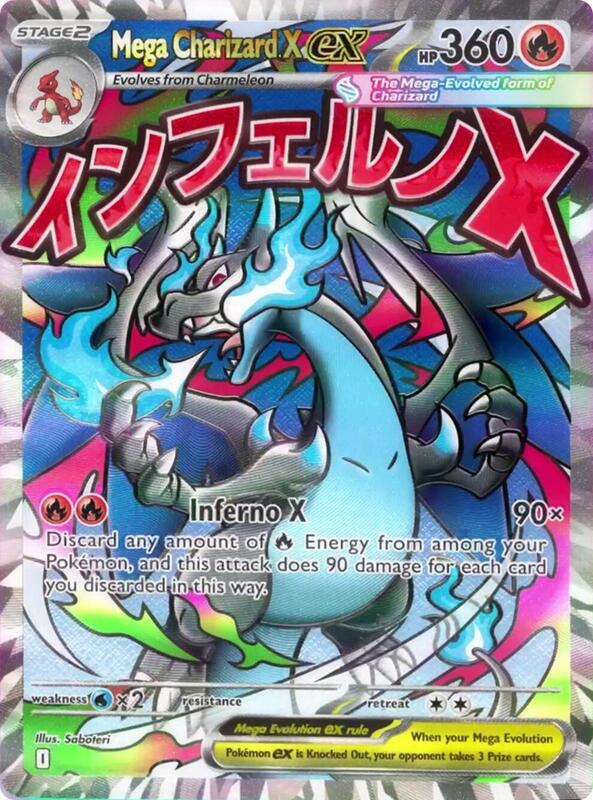
Before the reading, two things about the top row that the table cannot show. The MEP average rests on three cards, and one of them, Mega Charizard X ex, carries 106,786 slabs by itself, 93% of the group's total. Our catalog also holds a SECOND row under that same name and set at 2,757, which is the signature of a registry line several products share rather than of one card graded a hundred thousand times. Read 38,076 as 'this promo family has the deepest registry line we track', never as the population of a card you could buy. The rest of the table does not have that problem. Registry depth is print size TIMES grading propensity, and the second factor is not constant. Modern chase sets get graded at industrial rates (half of new slabs gem, so why not); DP-era commons were never worth the fee, so their registries understate what was printed. That is why the honest read is RELATIVE and era-aware: within an era, a 3x registry gap is a real print or survival gap. Across eras, the comparison tells you about grading culture as much as printing. Both readings are useful; conflating them is how folklore starts.
The investable corollary sits in the middle of the table. Celebrations at 18,661 average pop across its four deeply graded cards is consistent with what its prices already whisper: the anniversary set went out wide, and its premiums rest on demand rather than on scarcity. Meanwhile the 2008-2010 stratum (Majestic Dawn, Rising Rivals, Mysterious Treasures) is thin at every layer: thin prints, thin survival, thin registries, and, as our PSA 9 discount study found, thin supply one grade below the tens too. When demand ever rotates there, there is very little rock to mine.
Latest recorded PSA population per tracked card (moonstone daily registry snapshots through August 27, 2026), grouped by catalog set; sets shown have at least 3 tracked cards with pop above 100 (203 sets qualify). 'Average pop' is the mean across a set's tracked cards WITH POP ABOVE 100, the same threshold that qualifies the set, not across every tracked card. That matters: averaged over all tracked cards instead, Rising Rivals reads 135 rather than 234, Mysterious Treasures 213 rather than 332 and MEP 22,863 rather than 38,076, so the published figures are the above-100 means throughout and an earlier version of this note described the wrong population. The surviving cards skew toward a set's most-graded chases; absolute levels are therefore ceilings for typical cards, and cross-era comparisons mix print size with grading propensity as discussed. Where a set qualifies on only three or four cards, as MEP and Celebrations do, one registry line moves the whole row. No print-run estimates are stated or implied beyond relative registry depth. Not financial advice.