
Three lists are published from today, and each one answers a different question. Moonstone Vintage holds 500 cards printed before Black and White. Moonstone Modern holds 500 cards printed from Sword and Shield onward. The Moonstone 500 holds the 500 highest priced single cards, English or Japanese and from any set, that clear the rules set out below. Each list counts every card in it the same, each starts at a level of exactly 100 on September 7, 2026, and each has 14 readings behind it. On September 29 they read 104.75, 95.36 and 101.02. Vintage rose at every one of the 13 steps in its line; modern was unchanged at the first step and fell at the other 12. That is the finding, and this is the caveat printed beside it everywhere the levels appear: three weeks is not a history. Something that moves five percent in a month can move five percent back in a week, and nothing below is a trend.
What each list holds, written down
A published level that can change its own rules is a number nobody can check. So the rules are fixed in code, printed here, and printed again beside the chart wherever the levels appear. Two things are pinned in code rather than left to the day a job happens to run: the base day, and the window the membership is drawn over. The second of those was found by an audit of this page before it went up. The screens that decide membership read a window, and for this first period that window was whatever the calendar held when the job ran, which means a fifteenth reading landing the next morning would have redrawn the membership and restated the levels printed here. That cannot be measured before a fifteenth reading exists, so the nearest test was run instead, drawing the lists over a window one reading shorter on the same catalogue and the same prices: 13 of the 500 whole-market members change, the last card in moves from $92.76 to $91.26 and 12 of the 13 readings after the base day come out at a different level, while the vintage list changes 21 members and moves from $9.03 to $8.40. The window now ends on September 29, 2026 by declaration, which is why these figures are the figures. Every one of them was measured against production on September 29, 2026 and reproduced on two later independent runs that returned the same counts, the same members and the same 42 points.
The three Moonstone indices, rule by rule
| Rule | Moonstone 500 | Moonstone Vintage | Moonstone Modern |
|---|---|---|---|
| What it holds | The 500 highest priced single cards that clear every rule below, on the day the list was drawn, any set, English or Japanese | The 500 highest priced cards that clear every rule below, drawn from the Wizards of the Coast sets, the EX series, Diamond and Pearl, and HeartGold SoulSilver | The 500 highest priced cards that clear every rule below, drawn from Sword and Shield, Scarlet and Violet, and Mega Evolution |
| Day the list was drawn | 2026-09-07 | 2026-09-07 | 2026-09-07 |
| Level on that day | 100 | 100 | 100 |
| Cards counted | 500 | 500 | 500 |
| Price floor on the base day | $25.00 | $5.00 | $5.00 |
| Price of the last card in | $92.76 | $9.03 | $23.66 |
| Cards that cleared every rule | 1,222 | 642 | 1,618 |
| Median member on the base day | $170.91 | $33.50 | $49.96 |
| Range on the base day | $92.76 to $4,271.62 | $9.03 to $1,275.25 | $23.66 to $2,298.34 |
| Weighting | Equal. Every card is one five-hundredth of the level | Equal | Equal |
| A card must have printed | 3 or more different prices across the 14 readings | 3 or more | 3 or more |
| If a card stops being priced | Carried at its last price for 3 readings. Past that it leaves, and the cards still in are re-based on that same day so the level carries straight through | Same | Same |
| Membership redrawn | Every 90 days. The first redraw is 2026-12-06 | Every 90 days | Every 90 days |
| Refuses to publish below | 200 cards | 200 cards | 200 cards |
| Change since the base day | +1.02% | +4.75% | -4.64% |
| Deepest fall from a high in these 14 readings | -0.20% | 0.00% | -4.64% |
| Volatility, in percentage points | 0.07 over 10 day pairs | 0.09 over 10 day pairs | 0.11 over 10 day pairs |
| Same rules with the movement screen off | 101.41 over 3,225 cards | 103.12 over 2,476 cards | 95.89 over 1,630 cards |
Why the membership is frozen
A level that re-adds up whatever happens to be priced this morning is not a measurement of the market so much as a measurement of the morning. Two different things fake a move in that arrangement: cards joining or leaving, and a whole set being re-quoted at once. We have published both faults here before, which is why every Moonstone level is a paired comparison of each card against its own price on September 7 and never a fresh sum. Four Ways to Index the Same Pokemon Cards took one pool of 27,810 cards through four standard constructions and got four answers between -1.99% and +7.72%, so the construction is not a detail underneath the number. It is most of the number.
Membership is also chosen looking backward. The 500 are ranked on their price on September 7, the first day of the period, and then followed forward. Ranking on today's price and drawing the line back would count the whole rise of everything that rose into the list and quietly drop everything that fell out, which flatters a list built that way. The cost of doing it properly is visible: 854 products carry a price on September 29 and carried none on September 7, so no list could hold them, whatever they did in between.
Four more screens run before the ranking. A card with no catalog row is out, because a card we cannot name or picture cannot be shown to a reader: 536 products in the ranked pool went out on that rule alone. One TCGplayer product identifier is one member, because 72 products in the pool are claimed by two catalog rows each, and 11 of those landed inside the Moonstone 500, 2 inside modern and none inside vintage. A set that went on sale inside the window is out, because preorder cards sit flat and then fall on release day, which is a shipping date and not a market: three cards from one set, 30th Celebration, which went on sale on September 16, were caught by that rule, and 1,172 candidates reaching that screen belong to sets carrying no recorded release date, counted and reported rather than waved through silently. And a large move between two readings that the cheapest-printing column does not share is refused: 14 whole-market candidates and 30 vintage ones went out on that screen.
Those screens are not a formality, and they are the reason none of these lists is simply the dearest 500 cards in its part of the market. In the whole-market list, 2,034 cards priced at $25.00 or more on September 7 were turned away by the movement, full-window and corroboration rules, on top of the 536 that carried no catalog row. In the vintage list the same three rules turned away 1,840 cards priced at $5.00 or more, against 642 that survived, so the vintage list is drawn from the minority of older cards that moved at all. In the modern list they turned away 12.
The three Moonstone indices, September 7 to September 29, 2026
The two era lists share no cards at all, by construction, and they moved apart on every reading. The Moonstone 500 sits between them for a plain reason: it holds 85 cards that are also in the vintage list and 125 that are also in the modern one, and 290 that are in neither, because XY, Black and White, Sun and Moon and the Japanese market are inside the whole-market list and outside both era lists. A level that is nearly flat is not a quiet market. It is two markets pointing in opposite directions inside one list.
Share of each list whose price changed on September 29, 2026
That gap matters more right now than the levels do, and it is a warning as much as a finding. Across the 14 readings, 303 of the 500 vintage members printed only three different prices, which is the minimum the rules allow. In the modern list, 8 members did, and 277 of them printed ten or more. A vintage level therefore moves in steps, when a quote is refreshed, rather than continuously, and the volatility figure beside it is measuring the refresh schedule as much as the market. How to Tell a Pokémon Card Price Is Stale found that 78.5% of quoted prices that moved in four days moved with no new recorded sale behind them, which is the same problem seen from the card up.
Inside the lists
Every member below is a real row, priced on all 14 readings. The base price is September 7 and the current price is September 29. Volatility is the standard deviation of day to day percent changes, counted only where two readings sit on consecutive calendar days, in percentage points, over 10 such pairs. It is not scaled up to a yearly figure, because 14 readings cannot support that honestly.
Moonstone 500: the six dearest members on the base day
| Card | Set | Sep 7 | Sep 29 | Change | Volatility |
|---|---|---|---|---|---|
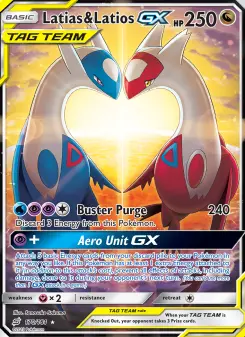
| Latias & Latios GX | Team Up | $4,271.62 | $3,913.85 | -8.38% | 5.44 |
| Umbreon VMAX | Evolving Skies | $2,298.34 | $2,214.79 | -3.64% | 2.06 |
| Gengar & Mimikyu GX | Team Up | $1,820.53 | $2,020.10 | +10.96% | 1.60 |
| Umbreon ex | Prismatic Evolutions | $1,442.14 | $1,384.05 | -4.03% | 0.79 |
| Lucky Stadium | Wizards Black Star Promos | $1,275.25 | $1,700.00 | +33.31% | 4.82 |
| Rayquaza VMAX | Evolving Skies | $1,255.34 | $1,255.44 | +0.01% | 0.00 |
Moonstone Vintage: the five largest rises and the five largest falls
| Card | Set | Sep 7 | Sep 29 | Change | Volatility |
|---|---|---|---|---|---|
| Marshtomp | Nintendo Black Star Promos | $85.14 | $217.94 | +155.98% | 0.00 |
| Arceus | DP Black Star Promos | $59.26 | $142.50 | +140.47% | 8.60 |
| Scizor ex | Unseen Forces | $119.85 | $186.95 | +55.99% | 0.00 |
| Arceus LV.X | Arceus | $116.98 | $177.50 | +51.74% | 7.63 |
| Jumpluff | Aquapolis | $89.65 | $129.99 | +45.00% | 0.00 |
| Kingdra | Aquapolis | $599.99 | $438.00 | -27.00% | 7.52 |
| Minun | HGSS Black Star Promos | $32.79 | $26.42 | -19.43% | 8.70 |
| Pikachu | Base Set | $16.26 | $13.36 | -17.84% | 2.87 |
| Celebi ex | POP Series 2 | $198.99 | $166.50 | -16.33% | 5.93 |
| Entei ex | Team Magma vs Team Aqua | $277.24 | $233.33 | -15.84% | 3.10 |
Moonstone Modern: the five largest rises and the five largest falls
| Card | Set | Sep 7 | Sep 29 | Change | Volatility |
|---|---|---|---|---|---|
| Celebi V | Fusion Strike | $76.11 | $89.67 | +17.82% | 1.47 |
| Dachsbun ex | Stellar Crown | $66.37 | $77.19 | +16.30% | 0.95 |
| Hydrapple ex | Stellar Crown | $36.45 | $39.53 | +8.45% | 0.61 |
| Iron Valiant ex | Prismatic Evolutions | $48.56 | $52.14 | +7.37% | 0.32 |
| Zacian V | Crown Zenith Galarian Gallery | $29.49 | $31.66 | +7.36% | 0.89 |
| Charmander | MEP Black Star Promos | $39.56 | $26.72 | -32.46% | 1.69 |
| Mega Gengar ex | Ascended Heroes | $56.21 | $38.44 | -31.61% | 2.34 |
| Bulbasaur | MEP Black Star Promos | $28.90 | $19.78 | -31.56% | 5.12 |
| Mega Eelektross ex | Ascended Heroes | $39.61 | $28.48 | -28.10% | 3.44 |
| Mega Charizard X ex | Phantasmal Flames | $27.53 | $20.55 | -25.35% | 2.39 |
The modern falls have a shape. All five are Mega Evolution era cards, from sets still being opened in volume, and all ten of the modern cards above printed ten or more different prices across the 14 readings. The vintage rises have no shape at all. Two are EX era cards, two are Diamond and Pearl era cards and one is a Wizards of the Coast card, two of the five come from promo sets, and three of the five carry a volatility of 0.00 over ten day pairs. That last figure does not mean they held steady. Ten consecutive day pairs were measured for each of them, and every price change they made landed across a gap in the readings instead, so all ten pairs show no change at all and the spread of ten zeros is zero.
What the two era lists are made of
What these indices cannot tell you
They are not total market values, and they are not weighted by how much of a card exists. Nothing in this database says how many copies of a card were printed. The column that looks like it might, printed_total, is the denominator on the card face, and the PSA registry counts only copies somebody paid to grade. So there is no honest way to weight these lists by size, and we do not: every card is one five-hundredth of its level, which means the number answers how the typical member did and not how the dollars did. How Concentrated Is the Pokemon Card Market? is the separate question of where value sits, and it has a separate answer.
They are also short. Fourteen readings over 23 days is barely three weeks, and three weeks tells you almost nothing about a market that moves in years. How Far Do Pokemon Cards Fall? A Drawdown Census needed 603 continuously quoted days to find that the median card's deepest fall from its own peak was 22.48%, with 77.11% of them still below that peak at the end. Against that, a 4.75% rise over three weeks is noise until it is not. The honest use of these levels today is as a live reading of relative direction, vintage against modern, and not as a return.
The prices behind them are TCGplayer market prices, which come from recent sales rather than from what sellers are asking, and they are the quote for the standard printing of a card. They are not sold comparables you can point at, and where a printing has no Near Mint data the recorded price can fall down the condition ladder and print a drop the card never had. Our screens catch the large ones. They will not catch every small one. Which Market Price? The Same Card Has Three Honest Numbers is the longer version of that problem.
The two era lists are English by construction. A Japanese card is filed under the Japanese market in our feature data and so falls into neither era list, which is why 89 of the Moonstone 500's members are Japanese language cards against 411 English ones, while neither era list holds a single Japanese card. XY, Black and White and Sun and Moon sit in neither era list either. Folding them into one side or the other would turn a boundary into an opinion, so they stay in the whole-market list only.
And the vintage list reaches 500 members only by going down to a $9.03 card, because the movement screen removes 1,804 vintage candidates that did not print three different prices in three weeks. A shorter vintage list would hold pricier cards. That is a choice and not a measurement, the cutoff is published on every reading, and it is the first thing we expect to revisit. One more absence worth naming: the first edition and shadowless printings of Base Set are not in any of these lists. The daily price file carries a separate shadowless line of 102 products worth $6,716.64 on September 29, and exactly one of those 102 carries a catalog row we can name or picture, so the Base Set cards in Moonstone Vintage are all the unlimited printing. Is a Pokémon Set Index Just Its Chase Cards? is the companion question for anyone reading a set level the same way.
As of price_history days 20703 to 20725, which is 2026-09-07 to 2026-09-29. Prices are TCGplayer market prices for the standard printing, derived from recent sales rather than from listings; price_min is read only to corroborate the direction and size of a large move and no figure here is taken from it. No graded or population data is used anywhere in this article. THE CALENDAR: price_history holds 31 days. A day is used only when it carries at least 90% of the median day's row count, which is 46,659 rows against a median of 51,843, and nine days inside the span fail that bar and are excluded by name. The bar is a bar and not a proof of completeness: two of the 14 readings admitted, 2026-09-08 at 50,400 rows and 2026-09-10 at 49,500, are missing 1,497 and 2,478 of the products priced on 2026-09-07 and carry the same round-number truncation signature as the days the bar rejects, and most of the 31 refusals for not being priced on every reading come from those two days. The nine refused days are: 2026-09-09 (45,900 rows), 09-11 (42,600), 09-12 (36,600), 09-13 (43,500), 09-14 (44,400), 09-15 (36,900), 09-16 (35,700), 09-17 (37,500) and 09-24 (44,106). Eight complete days before 2026-09-07 are held back as well, because price recorded the dearest printing of a card until the morning of 2026-09-07 and the standard printing afterwards, so a window crossing that day compares two different measurements of the same card. That boundary is provable from the two recorded columns: summed over a whole day, price and price_min are identical to the cent on every one of the eight days from 2026-08-30 to 2026-09-06 and differ on every day from 2026-09-07 onward, $901,389.72 against $931,553.98 on the first of them. That leaves 14 readings. SELECTION: the candidate pool is 15,622 distinct TCGplayer product identifiers. One product identifier is one member; 72 products in the pool are claimed by two catalog rows each, resolved to the row whose set name matches the price file's own spelling and otherwise to the lower card id, and 11 such products sit in the Moonstone 500, 2 in modern and none in vintage. Screens run in this order: catalog row required, era, set release date, base-day price floor, priced on all 14 readings, three or more distinct prices, corroborated large moves, then rank on the 2026-09-07 price and take the top 500. A card is counted as priced on a reading once per DAY rather than once per row, which is an off-by-one this engine had at first: a base-day row was read twice, so a card priced on 13 of 14 readings cleared a gate that says all 14. Exclusion counts, Moonstone 500: 536 no catalog row, 3 set released inside the window, 31 not priced on every reading, 1,989 under three distinct prices, 11,827 below the $25 floor, 14 uncorroborated large move, 722 eligible but outside the top 500; 1,172 candidates reaching the release screen belong to sets with no recorded release date and are counted and admitted rather than silently passed, and because that screen runs before the price and movement screens most of those candidates are then excluded for another reason, so the counts do not partition. Moonstone Vintage: 9,317 an era neither era list holds, 160 no feature row and therefore no known era, 3,127 below the $5 floor, 1,804 under three distinct prices, 6 not priced on every reading, 30 uncorroborated, 142 outside the top 500. Moonstone Modern: 6,919 an era neither list holds, 160 no feature row, 6,377 below the $5 floor, 12 under three distinct prices, 1,118 outside the top 500. Eras are report_features.era_bucket, the only era column this database has: vintage is WOTC, EX, DP and HGSS; modern is SWSH, SV and ME; XY, BW, SM, JA and OTHER are in neither list, and a card with no feature row has no known era and is excluded from both rather than defaulted into one. Those two exclusions were one number until this run: every candidate whose era was recorded but unwanted was counted as having no era at all, which mislabelled 1,310 of 1,470. THE LEVEL: equal weighted, base 100 on 2026-09-07, and every reading is the mean of each member's price divided by its own 2026-09-07 price, never a re-sum of the day. A member with no price is carried at its last price for three readings and then leaves for the rest of the period, at which point the remaining members are re-based on the day the last reading was PUBLISHED, so the closing level and the new base prices come from the same day; no member lapsed in any of the three lists over these 14 readings. A missing price is never counted as zero. A frozen member the level cannot read on the day its run of readings opens is named and counted rather than dropped, and the card count published beside a level is the count the level was computed over. A list publishes a reading only when at least half its live members carry a real price rather than a carried forward one, and refuses to publish at all below 200 members. Volatility is the standard deviation of day to day percent changes of the level, counted only across the 10 pairs of readings that sit on consecutive calendar days, in percentage points, and is not annualised. The deepest-fall figure is measured across these 14 readings only and is not a lifetime figure. Breadth counts members finishing above, below or level against their own base price. The moved share on a reading is the share of live members whose price differs from the previous PUBLISHED reading, which on this calendar can be more than a day earlier. 854 products carry a price on 2026-09-29 and none on 2026-09-07, so no list could hold them. All figures were produced by apps/web/src/server/indices.ts run against production without writing to it, and by four scratch scripts under apps/web/scripts which have been deleted. Set links are only given where the set resolves to a page that renders its own card list; promo sets and several EX era sets have no such page and are named in prose without a link. Nothing here is investment advice.