Fifty-seven cards. Out of 5,723 English cards carrying a live market price in our daily TCGplayer sync, the top one percent, 57 cards, hold 45.4% of the sample's entire dollar value. Stretch to the top ten percent and you have 87.9% of all the money. Meanwhile the median card in the game trades at 49 cents, and 3,295 cards, 57.6% of everything priced, sit under one dollar. The Pokémon market is not a market of cards. It is a market of a few hundred cards wearing a costume of fifty thousand.
The summit is stranger than you think
The ten most valuable English cards in the sample, raw market price
| Card | Set | Market |
|---|---|---|
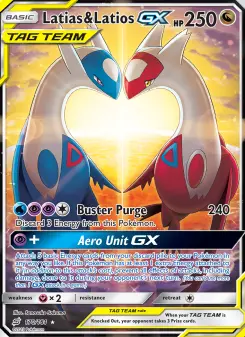
| Latias & Latios GX (alt) | Team Up | $4,167 |
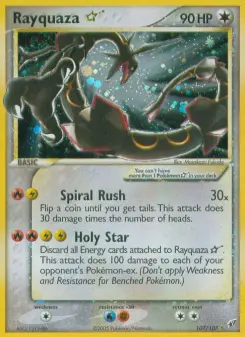
| Rayquaza Gold Star | Deoxys | $2,501 |
| Umbreon VMAX (alt) | Evolving Skies | $2,329 |
| Kyogre Gold Star | Delta Species | $2,101 |
| Espeon Gold Star | POP Series 5 | $1,900 |
| Gengar & Mimikyu GX (alt) | Team Up | $1,734 |
| Mewtwo Gold Star | Holon Phantoms | $1,400 |
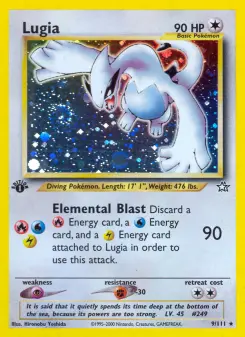
| Lugia | Neo Genesis | $1,300 |
| Lucky Stadium | Wizards Black Star Promos | $1,284 |
| Rayquaza VMAX (alt) | Evolving Skies | $1,250 |
The list is a fair map of where scarcity actually lives: Gold Stars from 2004-2007 sets nobody opened, Team Up alternate arts from the brief window before alt-art mania industrialized pull rates, one Neo Genesis bird, and one promo stadium card handed out free at Wizards league nights. What it is not is a list of famous Charizards. Fame correlates with print runs, and print runs are the enemy of a number like $4,167.
Concentration is not the same in every era
Inside Sword & Shield era cards, the top 1% holds 48.7% of the era's value, the most top-heavy cohort in the game: a handful of Evolving Skies and Lost Origin alt arts carrying thousands of near-worthless commons. WotC-era cards in the sample are the opposite, with the top 1% holding just 9.9%; a quarter century of attrition put a real floor under even the commons, so vintage value is spread across the whole set list. Read that vintage number as directional rather than precise: only 92 WotC cards carried a live price on this date, so its top one percent is one card, and on the 1,652 priced today the same measure reads 24.1%, still the least top-heavy era on the board. Modern sets concentrate; vintage sets marinate.
Sample: all 5,723 English-catalog cards holding a positive base-printing market price in moonstone's daily TCGplayer price sync on August 26, 2026 (cards without a live dump price, including most Japanese printings, are excluded, so totals describe this priced sample, not every card ever printed). Prices are the base printing per card; graded premiums are not included. Era assignment follows set release windows. Concentration figures are straight sums over that sample. Scope note added 2026-09-22 after an independent recomputation against production. On August 26 our price coverage was 5,723 English cards, and our weekly tape confirms the figure: 5,826 English cards carried a recorded price that week, over $89,305 of value, concentrating 39.4% in the top one percent. That coverage is no longer what it was. Four days later the daily card tape opened with 21,244 priced English cards worth $463,137, and on the same arithmetic the top one percent holds 38.2% rather than 45.4%, the top ten percent 84.4% rather than 87.9%, the median card is $0.91 rather than $0.49 and 51.1% trade under a dollar rather than 57.6%. Today the figure is 37.2% on 21,438 English cards. The shape of the finding survives the fourfold expansion; the exact percentages belong to the August 26 sample and should be read as such, and so should the WotC top-one-percent figure above, which on 92 priced vintage cards was a single card and today, on 1,652, is 24.1%. Not financial advice.