
Every dossier we publish prints two kinds of numbers next to each other, and they differ in two ways at once, not one. First the measurement: graded medians come from verified sold transactions, money moved and a receipt exists, while the raw price is an ask, what sellers are currently requesting rather than what buyers are paying. Second, and this is the one that gets skipped, the OBJECT. A raw card and a PSA 9 are different assets. The raw copy carries an option the slab has already spent: it might come back a 10. Comparing them is still worth doing, because the grading pitch compares them, but nothing in this piece should be read as comparing like with like. We have carried a one-line caveat about the ask on every report. Then we measured the gap properly, and the caveat deserves a promotion.
A nine under the ask is the tell
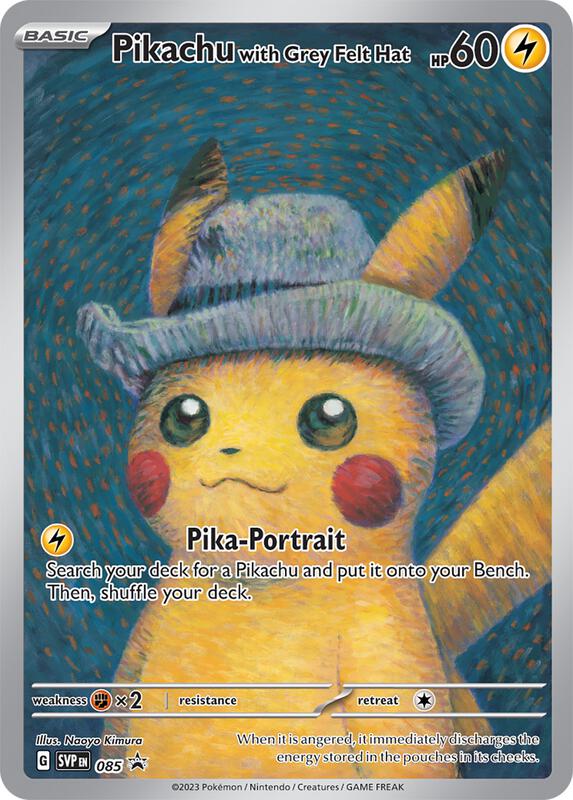
Take the 176 report dossiers on our book as of August 29, 2026, keep the 152 where the PSA 9 median stands on at least 20 verified comps alongside a raw ask, and just compare the columns. On 55 of them, more than one card in three, the graded nine SELLS for less than the raw card ASKS. Umbreon VMAX asks $2,378.74 raw while its nine sells at $2,254.50 on 160 comps. Pikachu with Grey Felt Hat asks $1,094.31 against a $987.50 nine on 486 comps. Mew ex from Paldean Fates asks $1,006.58 against an $871.50 nine on 868 comps, a sample nobody gets to argue with. Now the careful part, because there are three readings of that gap and only one of them is a scandal. The raw copy might be priced for its option on a PSA 10, which is a real and rational premium and does not require any copy to be certain to gem. The ask might simply be high, which is what an ask usually is. Or both. What the gap is NOT is arithmetic nonsense: a slab selling under a raw ask is ordinary once you remember the raw card still has a ticket in the draw. Our gem-rate work prices that ticket at 58.6% across the recent submissions of a 99-card cohort of heavily-graded chases, with individual cards running from under one in ten to better than half, which is high enough to explain a fair part of the gap and nowhere near uniform enough to explain all of it on every card. The practical consequence is the same either way, and it is the next section.
The nightly feature table, which sweeps 500 cards rather than the report cache, prints the same shape: of 353 cards with both figures, 100 are inverted, 28%. This is not a quirk of famous cards. It is the structural gap between what asking and selling mean, the same gap our $479 alt-art autopsy found on a single card and Which Market Price Is Real mapped across venues. The ask is the ceiling of the raw market, quoted as if it were the middle.
Now haircut the ask, and watch the nine trades die
Here is where it costs real money. The most common grading pitch is the nine trade: the card gems sometimes, but even the modal PSA 9 outcome clears the raw price plus the $20 fee, so grading looks free. At printed asks, 62 of our 152 deep-tape cards clear that bar. But you do not transact at printed numbers: the ask overstates what raw copies fetch, and the sold median understates what selling costs you after fees. Demand a 15% cushion, meaning the nine must beat 1.15 times the ask plus the fee, and only 48 trades survive. Fourteen die, and they are not obscure.
Eight of the fourteen grade-the-nine trades that die under a 15% cushion
| Card | Raw ask | PSA 9 sold (comps) | Margin at ask | Margin at 15% cushion |
|---|---|---|---|---|
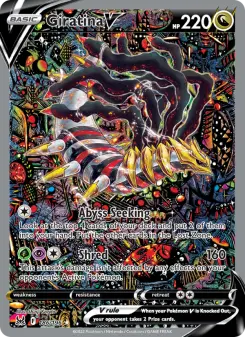
| Giratina V alt, Lost Origin | $823.70 | $905 (208) | +$61.30 | -$62.25 |
| Mega Charizard X ex, Phantasmal Flames | $672.78 | $743 (798) | +$50.22 | -$50.70 |
| Charizard, SWSH promos | $580.92 | $625.53 (26) | +$24.61 | -$62.53 |
| Blastoise & Piplup GX, Cosmic Eclipse | $494.20 | $531.44 (61) | +$17.24 | -$56.89 |
| Sabrina's Gengar, Gym Challenge | $427 | $488.50 (26) | +$41.50 | -$22.55 |
| Charizard, Celebrations Classic | $170.70 | $193.25 (769) | +$2.55 | -$23.05 |
| Charizard ex, Obsidian Flames | $109.10 | $142.50 (684) | +$13.40 | -$2.96 |
| Charizard V, SWSH promos | $53.63 | $74.99 (305) | +$1.36 | -$6.68 |
Look at the comp counts before you argue with the table. The Mega Charizard X ex nine stands on 798 verified sales, the Celebrations Charizard on 769. These margins are not sampling noise; they are trades whose entire profit lives inside the gap between asking and getting. If your grading thesis on a card survives only when you value your raw copy at the full ask, you do not have a grading thesis. You have a listing-page screenshot. The Grading Tax walks the full cost stack; this study is about the revenue side being imaginary.
Universe: the 176 live mreport payloads on our book as of August 29, 2026; deep tape means a PSA 9 median on 20+ verified comps plus a recorded raw ask. The two legs of every comparison here are a SOLD median for the slab and an ASK for the raw card, and they are also two different assets, a graded 9 and an ungraded copy that still carries its chance of a 10; both asymmetries are stated in the body rather than only here. Margins are PSA 9 sold median minus ask minus the $20 grading fee; the stress test replaces the ask with 1.15x the ask. The 15% cushion is our chosen severity, not a measured clearing discount: real ask-to-sold gaps vary by card and venue, and we do not have raw sold tape to pin each one. The table prints eight of the fourteen trades that die. The wider sweep uses the nightly 500-card feature table. That August 29, 2026 report edition has since rolled over and the book now holds tens of thousands of card payloads across newer editions, so the 176, 152 and 55 counts are a dated snapshot that cannot be rebuilt from current tables. Not financial advice.